Services

Forecasting and Planning

Make the assumptions easier to see.

Demand changes. Budgets tighten. Customers behave differently from one month to the next. Planning cannot remove uncertainty, but it can make the decisions around it less reactive.

Businesses collect valuable information through sales, marketing, operations and customer interactions. The challenge is turning that information into something useful before the moment to act has passed.

See the patterns. Understand the possibilities.

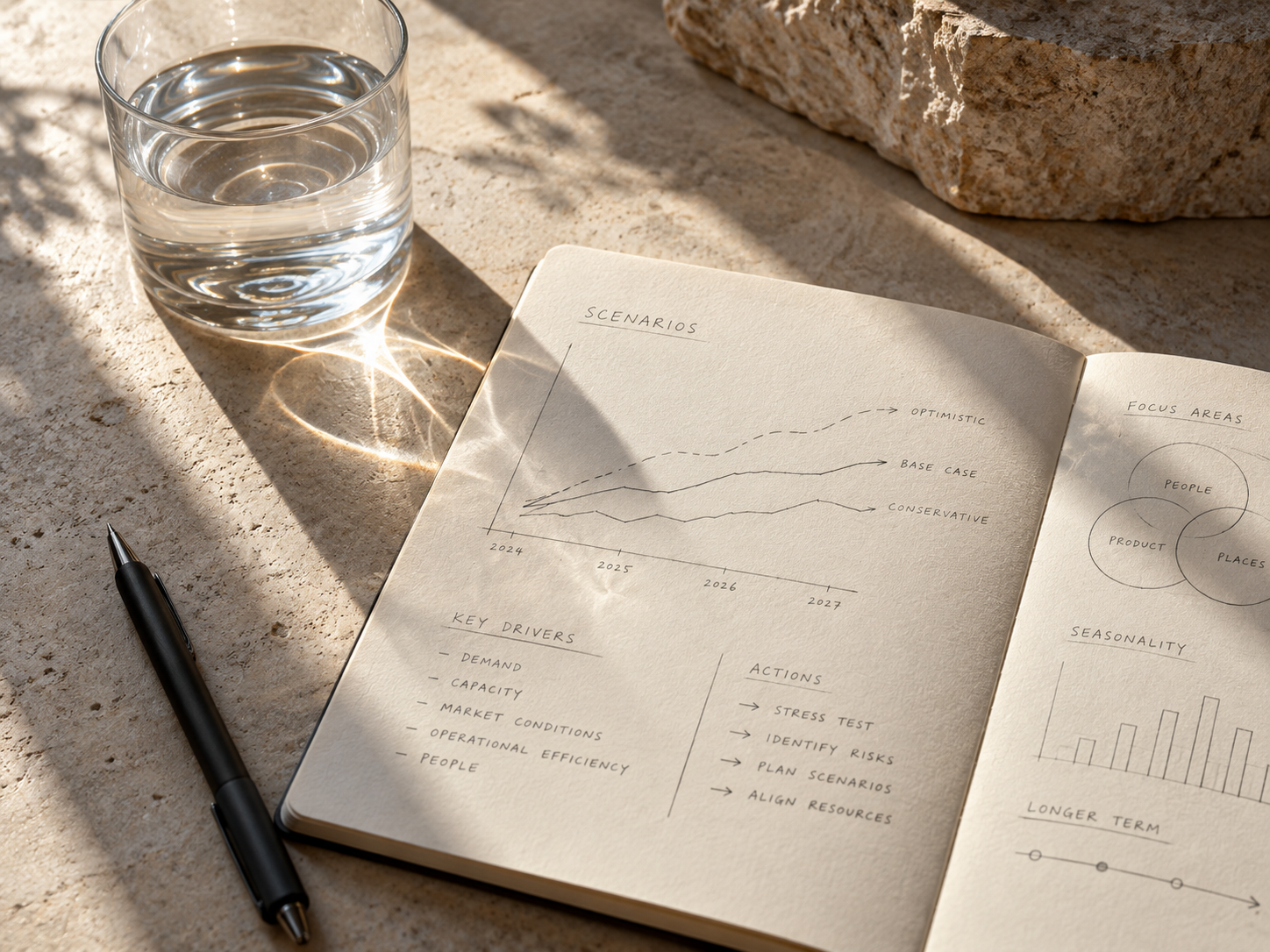
What if you could compare likely demand under different conditions? Spot a change in performance earlier? Or give the team a shared view of the assumptions behind next quarter’s plans?

Forecasts are not promises. They are tools for exploring scenarios, testing decisions and knowing what to watch. We help shape an approach that is understandable enough to use and flexible enough to question.

Build the plan around a decision.

A forecast is useful when it helps someone decide what to do. How much stock should we order? Can the team handle another project? What happens if demand changes?

‍

We begin with those questions, then assess the information available. We look at its history, gaps and consistency before choosing an approach that fits the decision.

‍

The resulting plan should show its workings. You can see which assumptions matter, compare different outcomes and understand when the numbers need reviewing. Where the evidence is limited, we make that visible so a precise-looking figure does not create more confidence than it deserves.

Give the next decision a clearer foundation.
Build an understandable view of demand, resources and possible outcomes around the questions your business needs to answer.
Demand Forecasting
Use available sales and operational history to estimate future demand, with attention to seasonal patterns, unusual events and uncertainty.
Scenario Planning
Compare the implications of different assumptions about demand, pricing, capacity or costs before committing to a plan.
Resource Planning
Connect expected activity with the stock, time or team capacity needed to deliver it, making potential pressure points easier to discuss.
Forecast Review
Compare forecasts with actual results, review the causes of meaningful differences and update the assumptions as your business changes.
A useful forecast helps you decide what to do next.
A few things worth knowing.
How much historical data do we need?
Plus icon
It depends on the question and the variability of your business. We can assess what is available and be clear about any limitations.
Will the forecast tell us exactly what will happen?
Plus icon
No. Forecasts estimate possible outcomes and carry uncertainty. We aim to make assumptions and confidence levels understandable.
Can you work with data from several systems?
Plus icon
Often. The first step is understanding where the information lives, how reliable it is and whether the necessary access is available.
Is forecasting useful for smaller businesses?
Plus icon
It can be, particularly where stock, staffing, budgets or demand fluctuate. The scope should fit the value of the decisions being made.
What does a forecasting project involve, and how is it priced?
Plus icon
We agree the decisions the forecast needs to support, the data sources, planning horizon and expected outputs. The work may include data preparation, a model, scenario controls and a review session. Pricing and timing depend heavily on data readiness, which we assess before confirming the project.
Plan with a little more confidence.
Bring us the decision you’re trying to make and the information you have. We’ll help establish what it can usefully tell you.
Submit a brief
Submit a brief
Privacy settings